90%+
Clinically licensed faculty
School of Social Work
Prepare for clinical social work practice in our CSWE-accredited Master of Social Work (MSW) program. Our program is recognized for its commitment to social justice, excellence in teaching & mentorship, and exceptional preparation for licensure and future practice. Our curriculum is focused on clinical social work practice which supports individuals, groups, families, and communities within the context of programs, policies and systems. Incorporating whole-person care, students are taught through the lens of intersectionality and social justice.
Our students graduate with:
Clinically licensed faculty
Field practicum sites
Learning modalities: weekend/hybrid or in-person weeknights
This pathway allows students to complete all required coursework for both the MSW and Licensed Alcohol and Drug Counselor (LADC) without extending their time in the program, and provides opportunities for dual-licensure. The MSW/LADC pathway requires two additional courses and 280 additional fieldwork hours in the clinical internship. It provides opportunities for students to expand their professional opportunities by working in the field of substance use and behavioral disorders. Contact us with any questions regarding this new pathway at: mswinfo@stthomas.edu.
The J.D./MSW program is designed to provide you with both humanitarian and legal perspectives for your professional practice. An understanding of the practice of social work and the practice of law can be invaluable in the pursuit of justice for those in need. Attorneys with this unique skill set have the tools to develop and implement systemic change to protect vulnerable individuals and address unmet needs in our community.
All MSW students will begin their program in the fall or summer semesters, depending on the modality/length you choose.
In person, on-campus classes are Monday-Thursday, during the late afternoons and evenings. Hybrid classes have online course delivery with three Saturday sessions on campus each semester from 9:30 am to 5:30 pm.
All on-campus classes take place on the St. Paul campus.
| Standing | Modality | Course Load | Length | Start Term |
|---|---|---|---|---|
Advanced |
In person, on-campus |
Full-time |
One year |
Summer |
Advanced |
In person, on-campus |
Part-time |
Two years |
Fall |
Advanced |
Hybrid |
Part-time |
Two years |
Summer |
Regular |
In person, on-campus |
Full-time |
Two years |
Fall |
Regular |
In person, on-campus |
Part-time |
Three years |
Fall |
Regular |
Hybrid |
Part-time |
Three years |
Fall |
The MSW program is set up for anyone with a bachelor's degree, regardless of the program. The undergraduate program you completed determines your standing, or what classes you will need to take to complete the MSW program.
These courses are taken by all students regardless of standing.
*Four-credit courses; all other courses are three credits
These courses are taken by students with Regular Standing only.
All MSW students take three elective courses. Each year, elective offerings vary. Potential elective offerings include:
These courses are taken by all students regardless of standing.
*Four-credit courses; all other courses are three credits
These courses are taken by students with Regular Standing only.
All MSW students take three elective courses. Each year, elective offerings vary. Potential elective offerings include:

With over 35 years of clinical excellence, the MSW program at St. Thomas offers a rich legacy and forward-looking approach to social work education. Join an extensive network of 2,500+ clinically prepared MSW alumni and 200+ clinical field partners--many of whom go on to hire our graduates. These partnerships give you real-world experience through collaborative clinical supervision.
Ninety percent of our faculty are clinically licensed and actively engaged in practice, ensuring you're mentored by professionals who understand the realities of the field and bring research-backed interventions to life. Our faculty are committed to helping you grow as a clinical social worker and make your own distinctive mark on the profession.
Earn a $1,000 Tuition Stipend
MSW students may apply to become an Area of Emphasis Scholar in a critical, emerging clinical practice area:
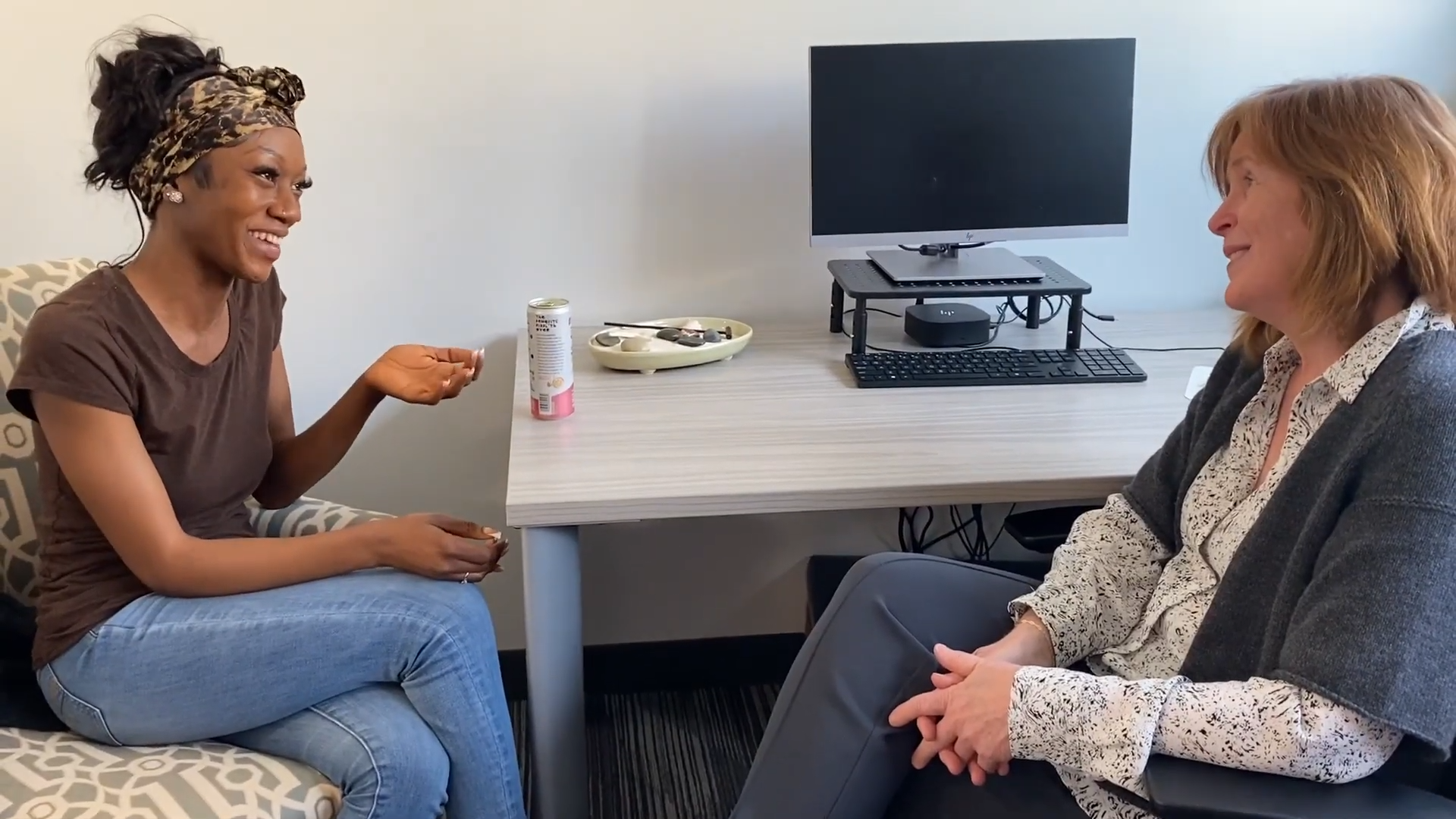
MSW student Edwina Vah talks about her experience at St. Thomas and what has made her time in the Master of Social Work program special.
Social work is a licensed profession. Each state’s licensing body establishes its own rules and regulations for getting and maintaining social work licensure in that state. The Association of Social Work Boards (ASWB) provides the licensing examinations required. There are four ASWB tests: Bachelors, Masters, Advanced Generalist, and Clinical. Social work students should check with the licensing body in each state in which they plan to practice social work to make sure they are clear about the licensing requirements in that state. ASWB maintains complete contact information for every licensing board on its website.
Social Work licensure in MN is regulated by the Minnesota Board of Social Work.
Effective in July 1987, the Minnesota legislature passed legislation that provides for licensure of social workers at four levels. The licensing statute in Minnesota is both a title and practice act, which means that all persons who use the title "social worker," and all persons who provide social work services to clients in the state, unless there are specific applicable exemptions, are covered by the law. The four levels of licensure are:
Contact the Minnesota Board of Social Work:
2829 University Ave. SE, Suite #340
Minneapolis, MN 55414-3239
(612) 617-2100 (main)
(888) 234-1320 (toll free)
(800) 627-3529 (TTY)
(612) 617-2103 (fax)
All licensees must document 40 Continuing Education (CE) hours, including two in ethics, during each 24-month renewal term. For more information, review the MN Board of Social Work CE requirements.
In 2007, Minnesota State Legislature passed a law, effective August 1, 2011, requiring 360 hours of specific clinical coursework in six clinical knowledge areas, in addition to required continuing education hours during the 4000 hours (2+ years) of post-MSW supervised practice in a clinical setting, for everyone applying for LICSW licensure. Review the MN Board of Social Work LICSW requirements.
Your transcript verifies which courses you took in our program and used together with the grid, you will be able to assess your status for the MN LICSW application. For a transcript of your coursework, please contact the Registrar's Office.
Graduates should send both the completed original Board of Social Work LICSW application form (Form 1) and the grid for signature to msw@stthomas.edu.
The school will forward your completed Form 1 and signed grid to the Board of Social Work. Please see example of completed Form 1 and Clinical Grid to the right under Related Content if you are unsure of how to complete these forms.
Most students complete the majority of required clinical clock hours in the MSW program. If you are short in any knowledge area, you can complete the remaining hours as continuing education (CE) hours. Review these instructions on how to satisfy your 360 clock hours using CEs. (Click on the "360 Clock Hours" tab under the Application Process section.)
The school does not verify CE hours. You will use Form 3 and submit information directly to the Board.
St. Thomas has conducted an analysis of our MSW curriculum to identify the clock hours for each clinical knowledge area covered in each required and elective MSW course. St. Thomas has prepared sample grids to help you record how you have covered the required clinical knowledge content through your MSW courses:
Graduates should send both the completed Board of Social Work LICSW application form (Form 1) and the appropriate content grid for signature to msw@stthomas.edu. The School of Social Work will forward your completed Form 1 and signed grid to the Board of Social Work. You can view a sample Board of Social Work Form 1.
An individual who desires to practice as a school social worker in Minnesota must be licensed by the Minnesota Department of Education. For more information, contact the Minnesota Department of Education at (651) 582-8200.
You can also search for "Related Services Licensure" on the Minnesota Department of Education website.
Social work is a licensed profession. Each state’s licensing body establishes its own rules and regulations for getting and maintaining social work licensure in that state. The Association of Social Work Boards (ASWB) provides the licensing examinations required. There are four ASWB tests: Bachelors, Masters, Advanced Generalist, and Clinical. Social work students should check with the licensing body in each state in which they plan to practice social work to make sure they are clear about the licensing requirements in that state. ASWB maintains complete contact information for every licensing board on its website.
Social Work licensure in MN is regulated by the Minnesota Board of Social Work.
Effective in July 1987, the Minnesota legislature passed legislation that provides for licensure of social workers at four levels. The licensing statute in Minnesota is both a title and practice act, which means that all persons who use the title "social worker," and all persons who provide social work services to clients in the state, unless there are specific applicable exemptions, are covered by the law. The four levels of licensure are:
Contact the Minnesota Board of Social Work:
2829 University Ave. SE, Suite #340
Minneapolis, MN 55414-3239
(612) 617-2100 (main)
(888) 234-1320 (toll free)
(800) 627-3529 (TTY)
(612) 617-2103 (fax)
All licensees must document 40 Continuing Education (CE) hours, including two in ethics, during each 24-month renewal term. For more information, review the MN Board of Social Work CE requirements.
In 2007, Minnesota State Legislature passed a law, effective August 1, 2011, requiring 360 hours of specific clinical coursework in six clinical knowledge areas, in addition to required continuing education hours during the 4000 hours (2+ years) of post-MSW supervised practice in a clinical setting, for everyone applying for LICSW licensure. Review the MN Board of Social Work LICSW requirements.
Your transcript verifies which courses you took in our program and used together with the grid, you will be able to assess your status for the MN LICSW application. For a transcript of your coursework, please contact the Registrar's Office.
Graduates should send both the completed original Board of Social Work LICSW application form (Form 1) and the grid for signature to msw@stthomas.edu.
The school will forward your completed Form 1 and signed grid to the Board of Social Work. Please see example of completed Form 1 and Clinical Grid to the right under Related Content if you are unsure of how to complete these forms.
Most students complete the majority of required clinical clock hours in the MSW program. If you are short in any knowledge area, you can complete the remaining hours as continuing education (CE) hours. Review these instructions on how to satisfy your 360 clock hours using CEs. (Click on the "360 Clock Hours" tab under the Application Process section.)
The school does not verify CE hours. You will use Form 3 and submit information directly to the Board.
St. Thomas has conducted an analysis of our MSW curriculum to identify the clock hours for each clinical knowledge area covered in each required and elective MSW course. St. Thomas has prepared sample grids to help you record how you have covered the required clinical knowledge content through your MSW courses:
Graduates should send both the completed Board of Social Work LICSW application form (Form 1) and the appropriate content grid for signature to msw@stthomas.edu. The School of Social Work will forward your completed Form 1 and signed grid to the Board of Social Work. You can view a sample Board of Social Work Form 1.
An individual who desires to practice as a school social worker in Minnesota must be licensed by the Minnesota Department of Education. For more information, contact the Minnesota Department of Education at (651) 582-8200.
You can also search for "Related Services Licensure" on the Minnesota Department of Education website.
The University of St. Thomas social work program was first accredited as a joint program (with St. Catherine University) in 1975 from the Council on Social Work Education (CSWE). Since that time, the School of Social Work successfully obtained reaffirmation of accreditation through 2019. After the dissolution of the joint program, the St. Thomas BA in Social Work and Master of Social Work programs earned independent accreditation in 2019.
MSW Assessment of Student Learning Summaries: